


While everyone is talking about IoT, solar energy and electric vehicles etc., I totally agree these are great advancements towards green revolutions. But, When I was talking to a friend as part of a podcast on Web3 and Sustainable Development, She mentioned something interesting - nuclear fusion.
To be honest, nuclear fusion, at least in theory, has been around for decades. But this was the first time I was focused enough to actually understand it. The more I read about its benefits, the more fascinating it became.
Nuclear fusion, the process of combining atomic nuclei to form a heavier nucleus, is considered a potential solution to long-term sustainability challenges. Why? Because it offers a virtually unlimited supply of clean energy with no greenhouse gas emissions and minimal radioactive waste.
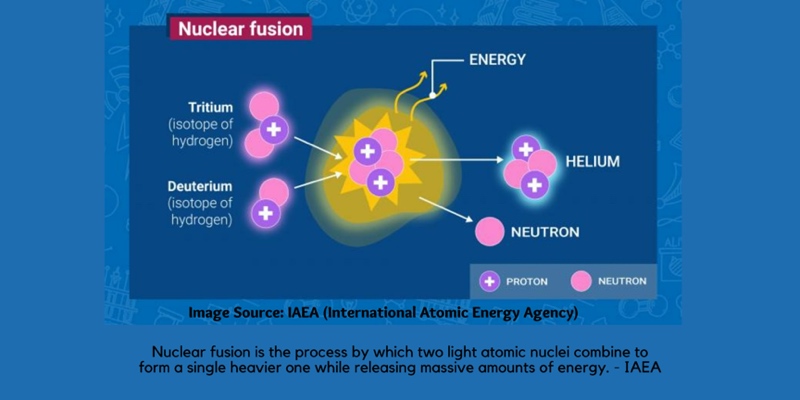
If you look at it closely, you will understand that every star in the universe, is alive because of nuclear fusion. It is because of this process that they create such an astonishing amount of heat and energy. The pressure at the core of any star is immensely high and that is where the nuclear fusion reaction occurs. Recreating even a fraction of that on Earth is no small task, but recent breakthroughs in labs suggest we're inching closer to making it a reality.
Carbon Capture and Storage:
While we sprint toward renewables, the fact remains. Fossil fuels are still part of the present energy mix. This is where Carbon Capture and Storage (CCS) comes into play. CCS involves capturing carbon dioxide emissions from industrial processes or power generation and storing them underground instead of releasing them into the atmosphere.
Although it's not a renewable energy source per se, CCS serves as a bridge solution buying us time while cleaner alternatives scale up. It's also being paired with Direct Air Capture (DAC) technologies, which pull CO₂ straight from the air. Imagine combining CCS with bioenergy (BECCS): you grow plants (which absorb CO₂), burn them for energy, and then capture and store the emissions. The result? Carbon-negative energy.
It’s not the flashiest innovation, but in a synergistic clean energy future, it absolutely plays a vital role.
Electric Vehicles: More Than Just Zero-Emission Cars
EVs have become the poster child of clean technology and for good reason. But what’s truly exciting is not just the vehicles themselves, but the ecosystem forming around them. Think vehicle-to-grid (V2G) technology, where EVs aren’t just consuming power, they're feeding it back into the grid during peak demand. That turns your car into a mini power plant.
Then there’s the materials side - new battery chemistries like solid-state batteries promise higher energy density, faster charging, and reduced reliance on rare earth elements. This is crucial for making EVs more sustainable across their entire lifecycle, not just on the road.
And when you pair EVs with renewable-powered grids and smart infrastructure? You don’t just get clean transport, you get an intelligent, distributed energy network.
The Real Game-Changer
What excites me most isn’t just one technology—it’s how all of these can work together. Imagine a world where:
- Nuclear fusion provides the base load of clean, limitless energy
- Solar and wind continue to scale with storage technologies filling in gaps
- Carbon capture scrubs what we can’t yet eliminate
- Electric vehicles store and share power on-demand
- IoT and AI optimize it all behind the scenes
That’s the real future of clean energy, it's not a single miracle solution, but a synergistic web of innovations, each solving a piece of the puzzle.
Let’s keep exploring.

 Made with Superblog